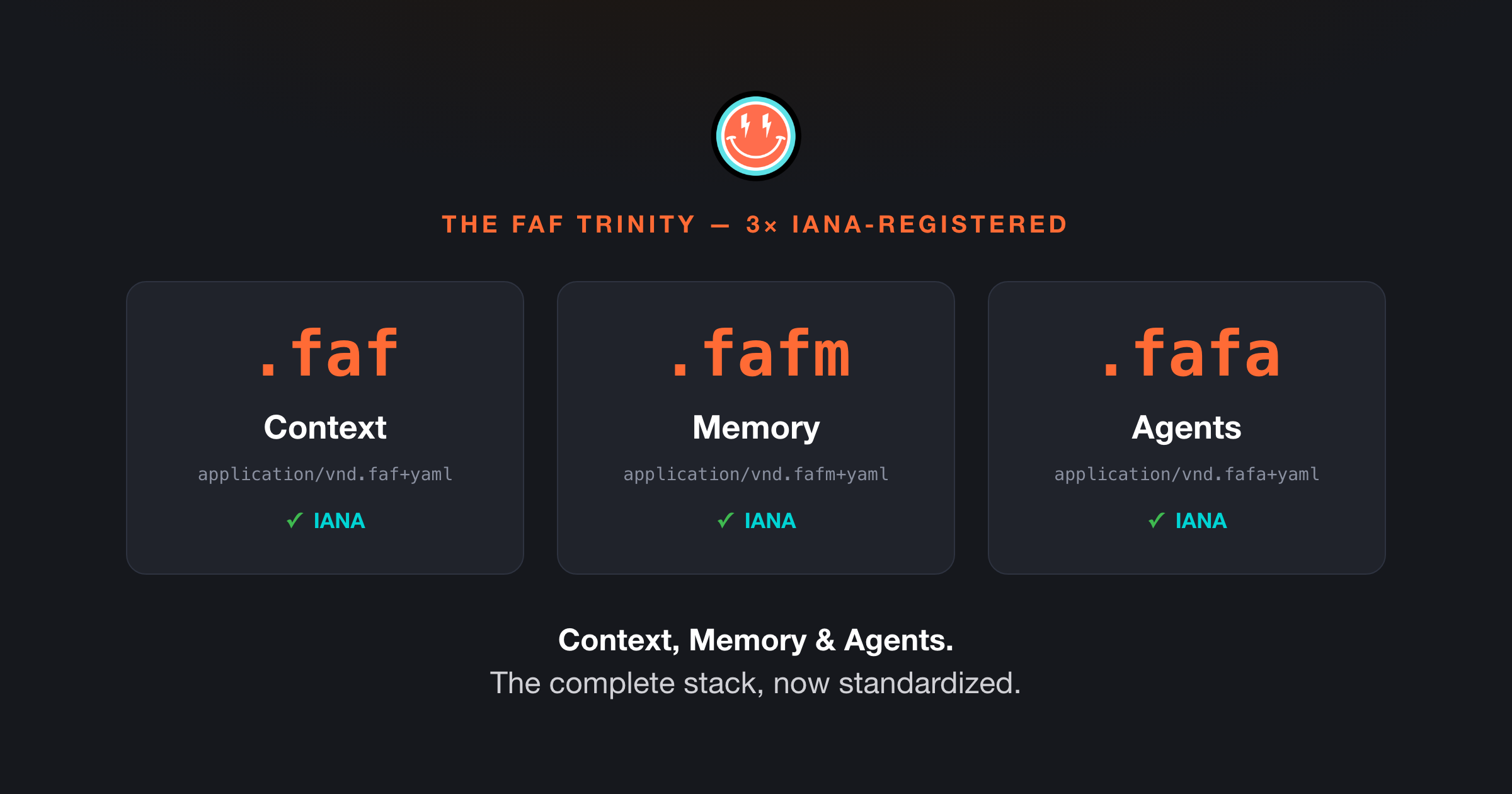
TL;DR: The trinity is complete. .faf (Context), .fafm (Memory), and .fafa (Agents) are now three IANA-registered media types — official, verifiable, and registered under the same name in the IANA registry.
Three types, one stack
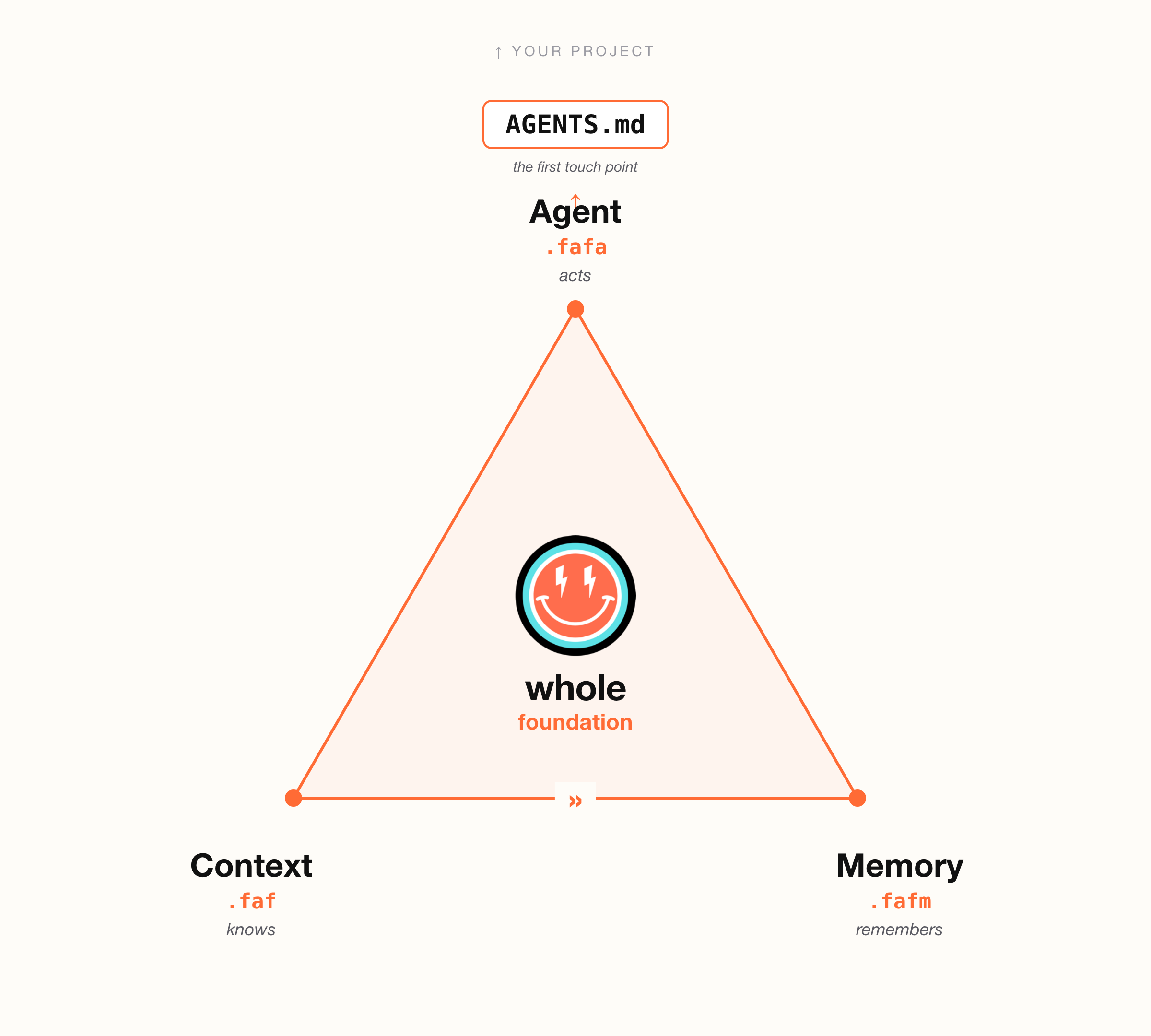
An AI system needs three things: to know the project, to remember across sessions, and to define what an agent is. Each now has a registered media type.
application/vnd.faf+yamlapplication/vnd.fafm+yamlapplication/vnd.fafa+yaml.faf is the persistent project context an AI reads first. .fafm is the memory that survives across sessions. .fafa is the agent card — the agentic definition. Context, Memory, Agents.
Why a registered media type matters
A real IANA registration isn't a label — it's something an AI can resolve and trust by syntax alone:
- The
+yamlsuffix tells any parser exactly how to read the file. - The
vnd.tree marks it as a defined vendor format, not a guess. - It's IANA-lookupable — anyone can confirm it exists.
A minted "type" string has the shape of a media type but none of the backing. A registration is a receipt.
Verify it
Don't take our word for it. Each is a live entry in the IANA media types registry:
The Numbers
- 3 — IANA-registered media types
- Context · Memory · Agents — the complete stack
- +yaml — structured and self-describing, parseable by syntax
- One registrant — all three under the same name in the IANA registry